
-
Recent Posts
- Article about tvättstugas in The Conversation
- Doing Less Happily Ever After
- Green Bullshit Jobs
- New Project: Investigating Doing Less in Everyday Life (IDLE)
- Slow Science and Work-Life Balance
- Unsustainably clean and smooth
- New research shows that consuming less makes us more happy- some NYE opinions in SydSvenskan
- Don’t let flying for work become normal again
- Why don’t we care that the ultra-rich are fucking up our climate?
- The girl gang that vanished
- Laconia – living alone consumption impact – Marie SkÅ‚odowska-Curie Actions
- Music festivals can show the way to sustainability – debate article in Dagens Nyheter
- En halstvätthistoria av Annika Rullgård
- Hackademia
- Response to my research
- Varför duscha vi så ofta? Jag pratar renlighetsnormer med Lena Nordlund på Vetenskapsradion
- Respons på en artikel i svd
- The disappearing communal laundry room in Sweden: a symptom of individual comforts winning over sustainability?
- Climate smart in the 50s
- Blog Post on Extinction Rebellion for LUCSUS
Archives
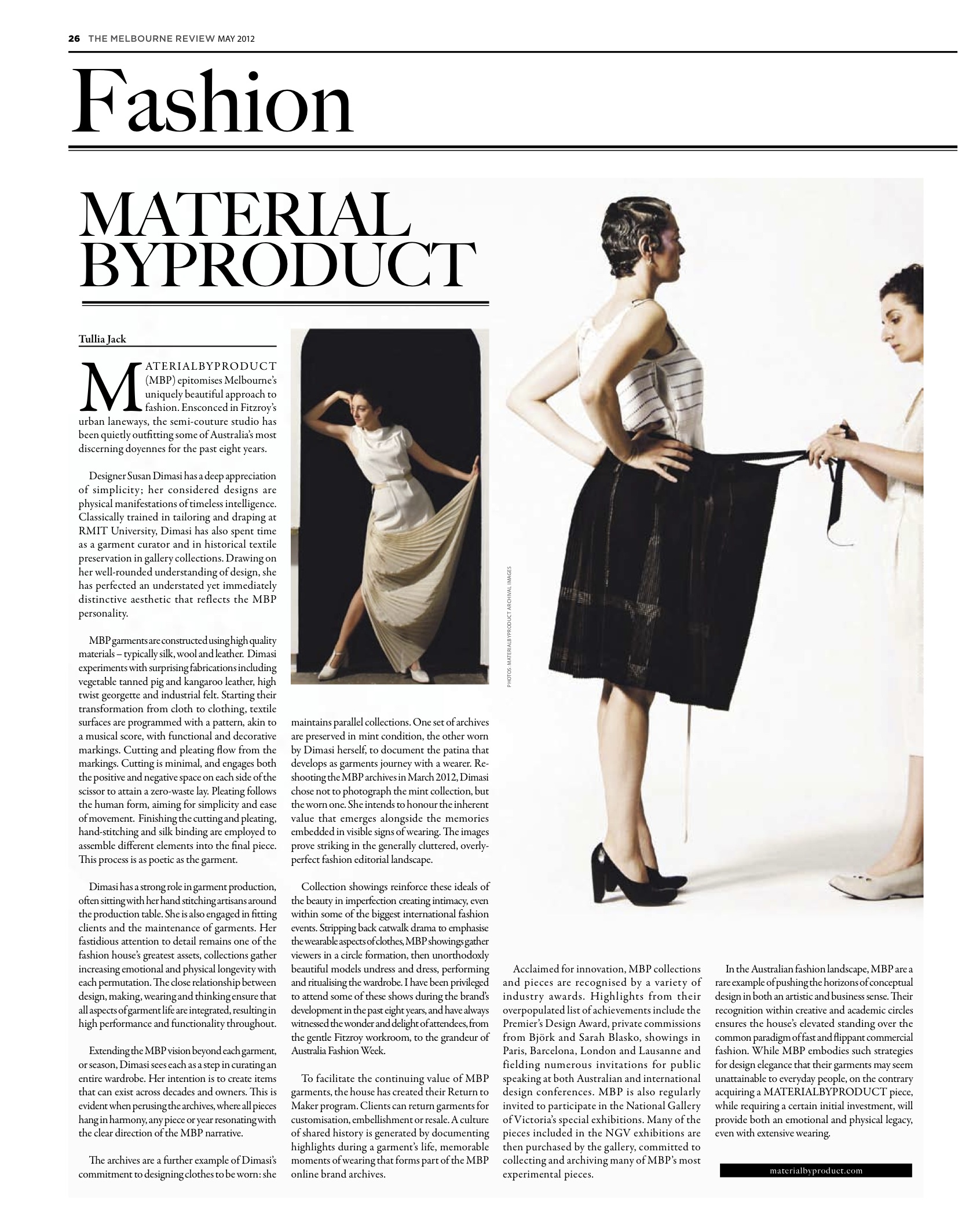
MATERIALBYPRODUCT for The Melbourne Review
Posted in writing
Tagged MATERIALBYPRODUCT, Melbourne, Shelley Lasica, Susan Dimasi, The Melbourne Review
Leave a comment
Call for Presentations of Papers @ RMIT Commune
RMIT Sustainability commune is currently inviting postgraduate researchers and thinkers in sustainable fashion to present research papers, practice presentations and workshops at the second annual Commune @ RMIT Brunswick on the 18th July 2012.
Commune is a Festival, Market and Conference Day devoted to sustainability issues and innovation in the Fashion and Textiles Design community.
Key Note Speakers include Kate Fletcher (LCF) UK, Holly McQuillan (Massey NZ) and Linda Jackson.
Please contact Patricia Brien if you have a paper/presentation/workshop to contribute to Commune:Â patricia.brien@rmit.edu.au
Posted in Uncategorized
Tagged Commune, conference, Holly McQuillan, Kate Fletcher, Linda Jackson, Research, RMIT, RMIT Brunswick, Sustainability, sustainable fashion
Leave a comment
Frankie Magazine on Nobody was Dirty
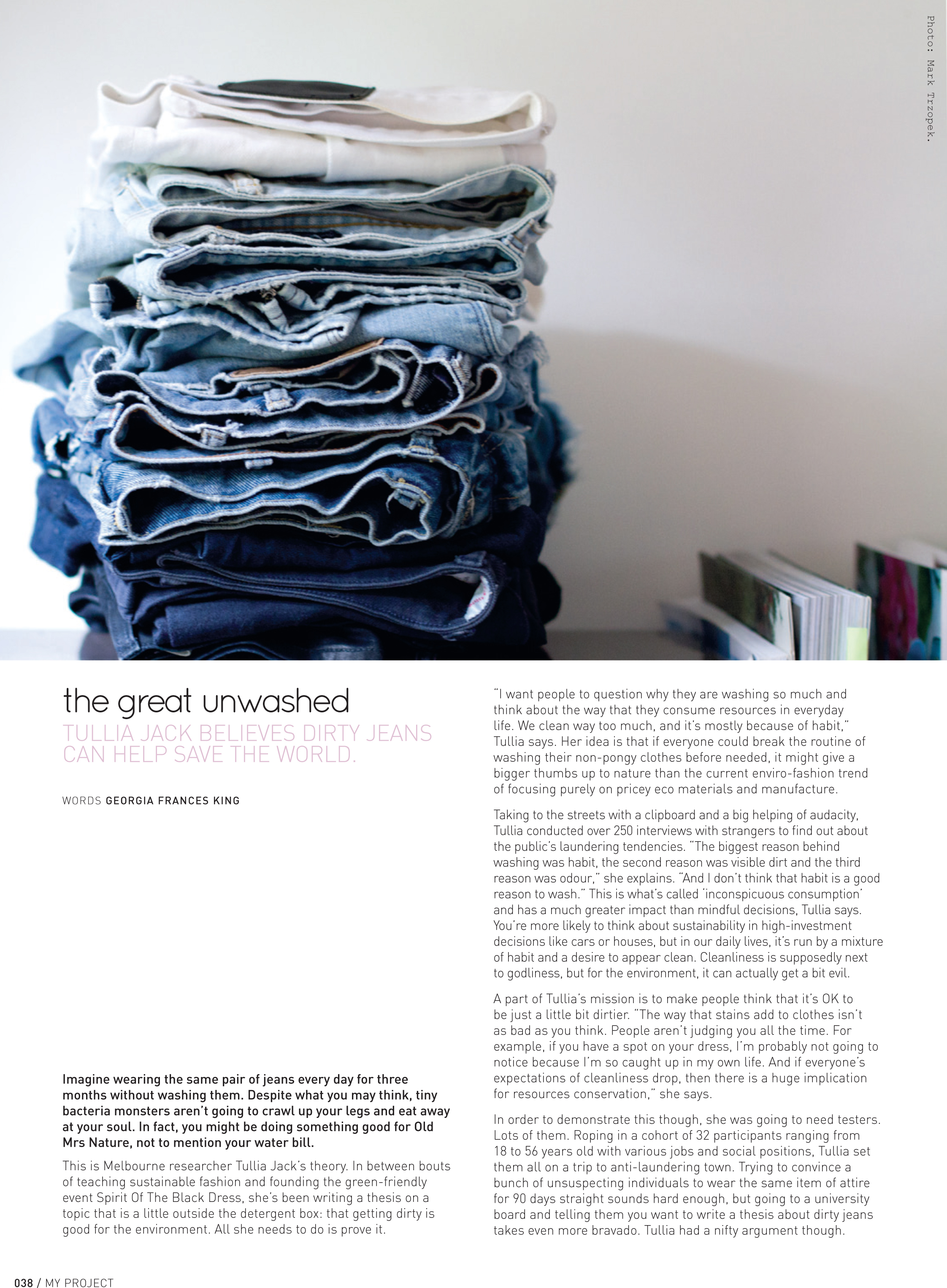
Thanks to Georgia Frances King of Frankie Magazine for some heart warming words. Propagating ideas of not washing to your 200,000 readers is exciting, I wonder how many people will reduce their laundry frequency as a result of reading this article.
Posted in my work, Nobody was Dirty
Tagged everyday, Frankie, Georgia Frances King, Laundry, Nobody was Dirty, Sustainability, The Great Unwashed, tullia jack, Washing
Leave a comment
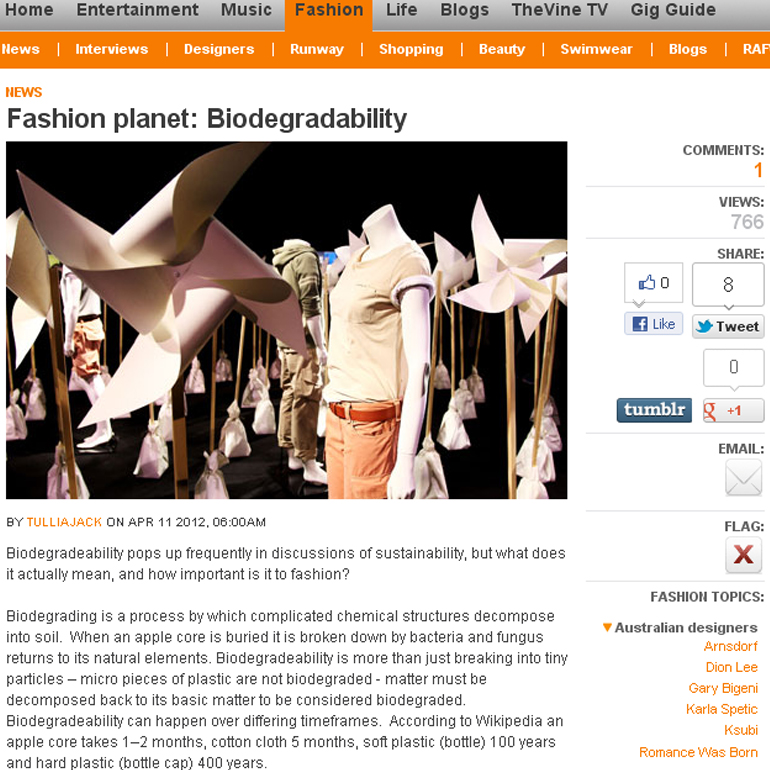
Biodegradability for The Vine
Posted in TheVine, writing
Tagged biodegradability, biodegradable, Fashion, plastic, sustainable fashion
Leave a comment
John Thwaites on Nobody was Dirty
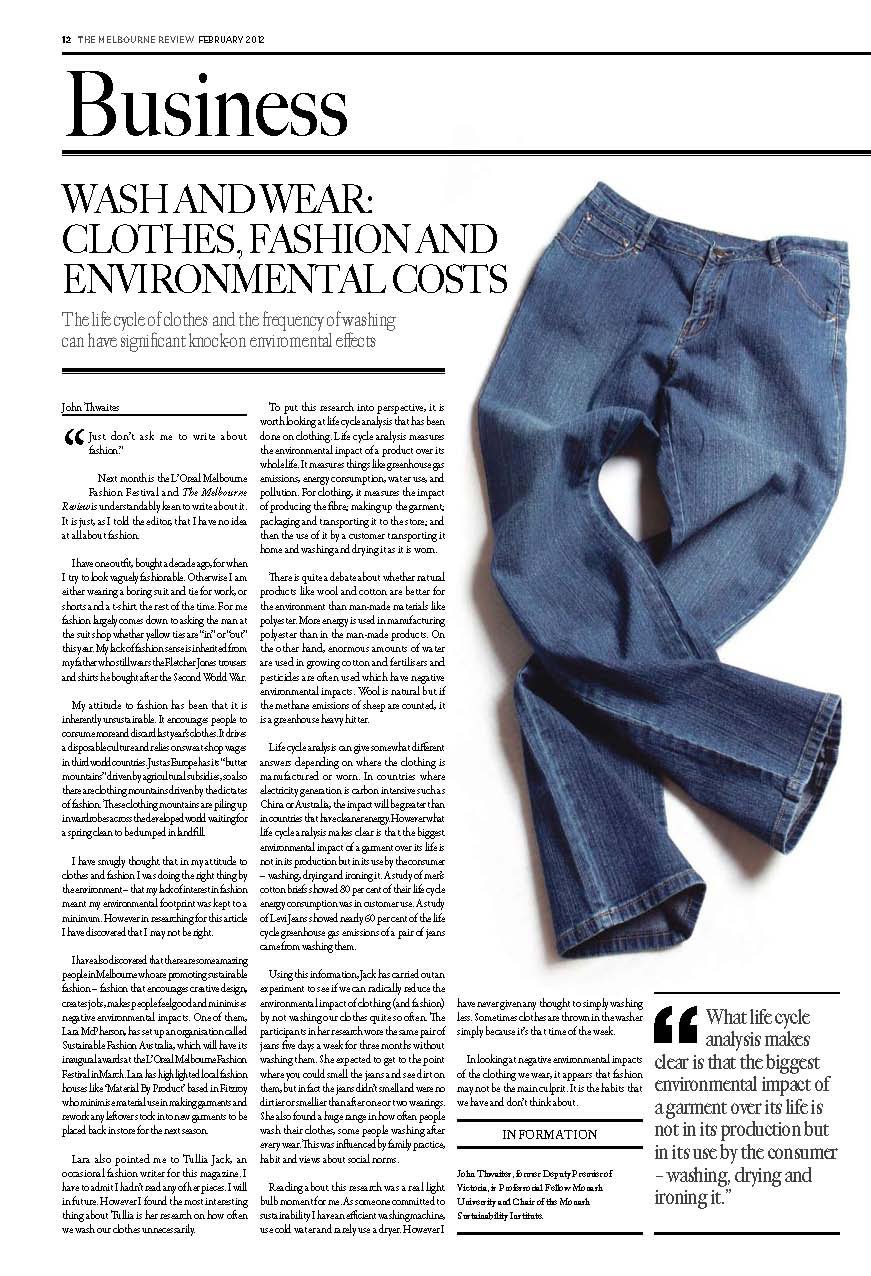
Professor John Thwaites is one of the most intelligent thinkers in sustainability and I am honoured to have his considered words on Nobody was Dirty published in The Melbourne Review.
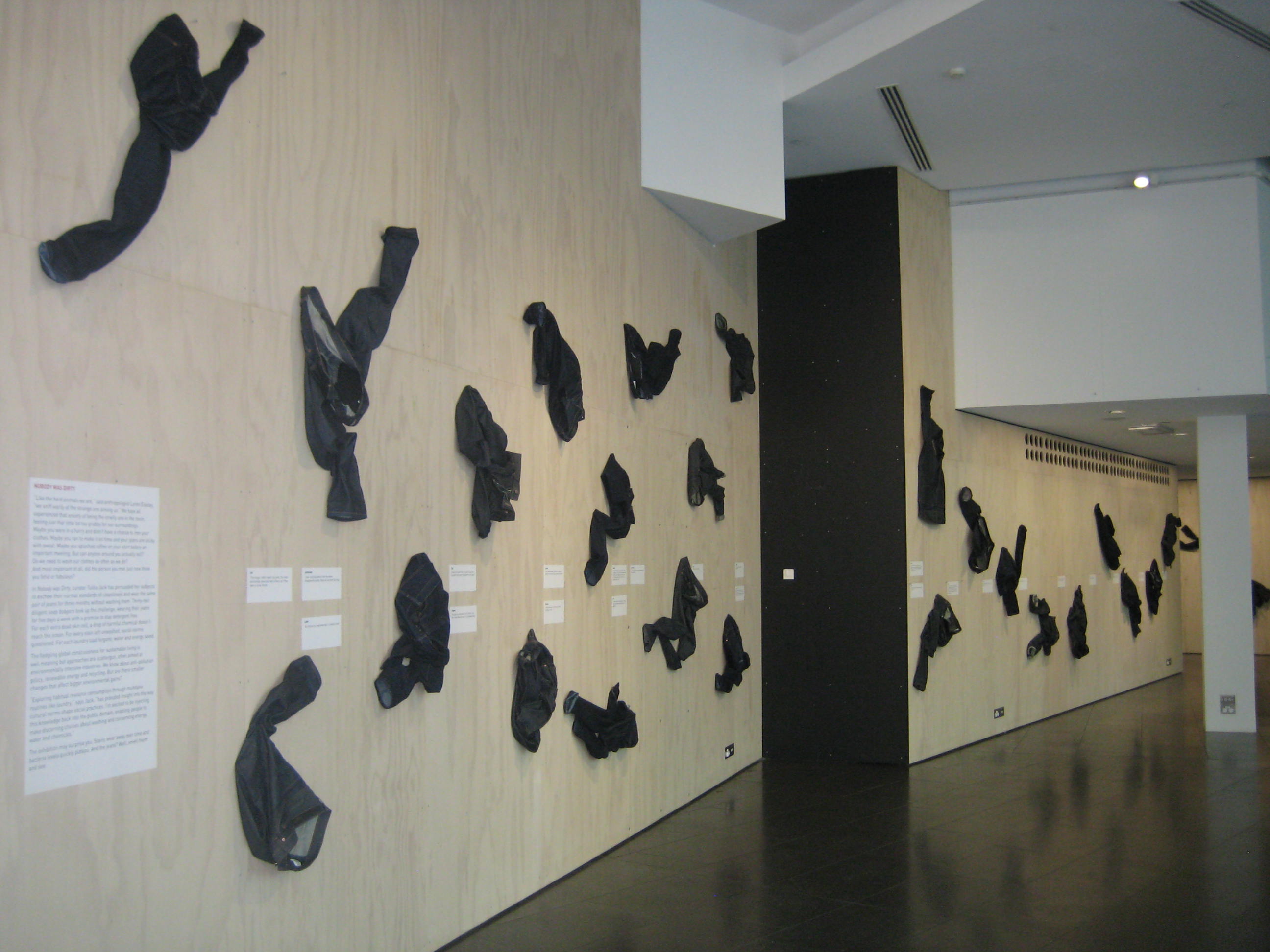
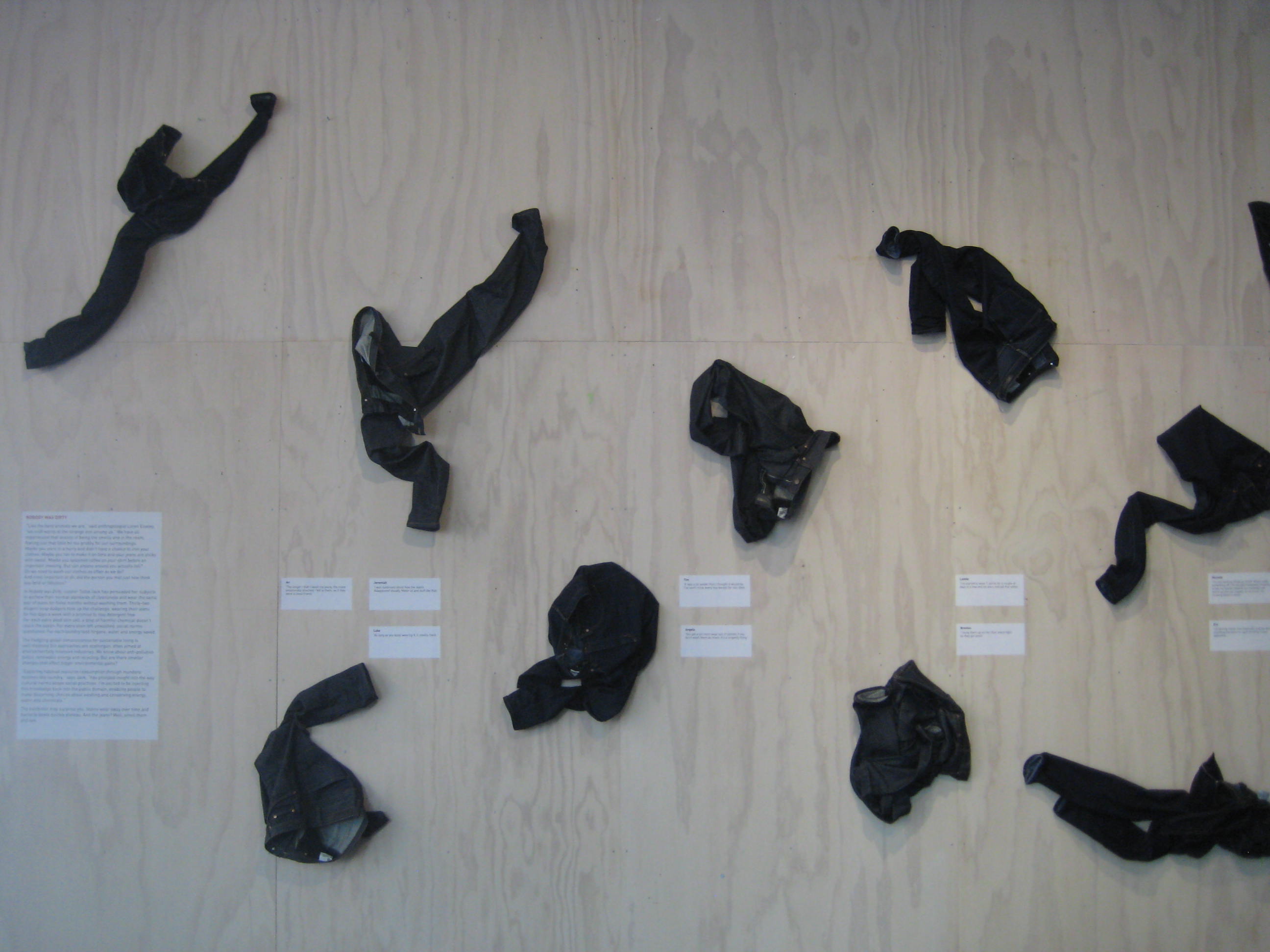
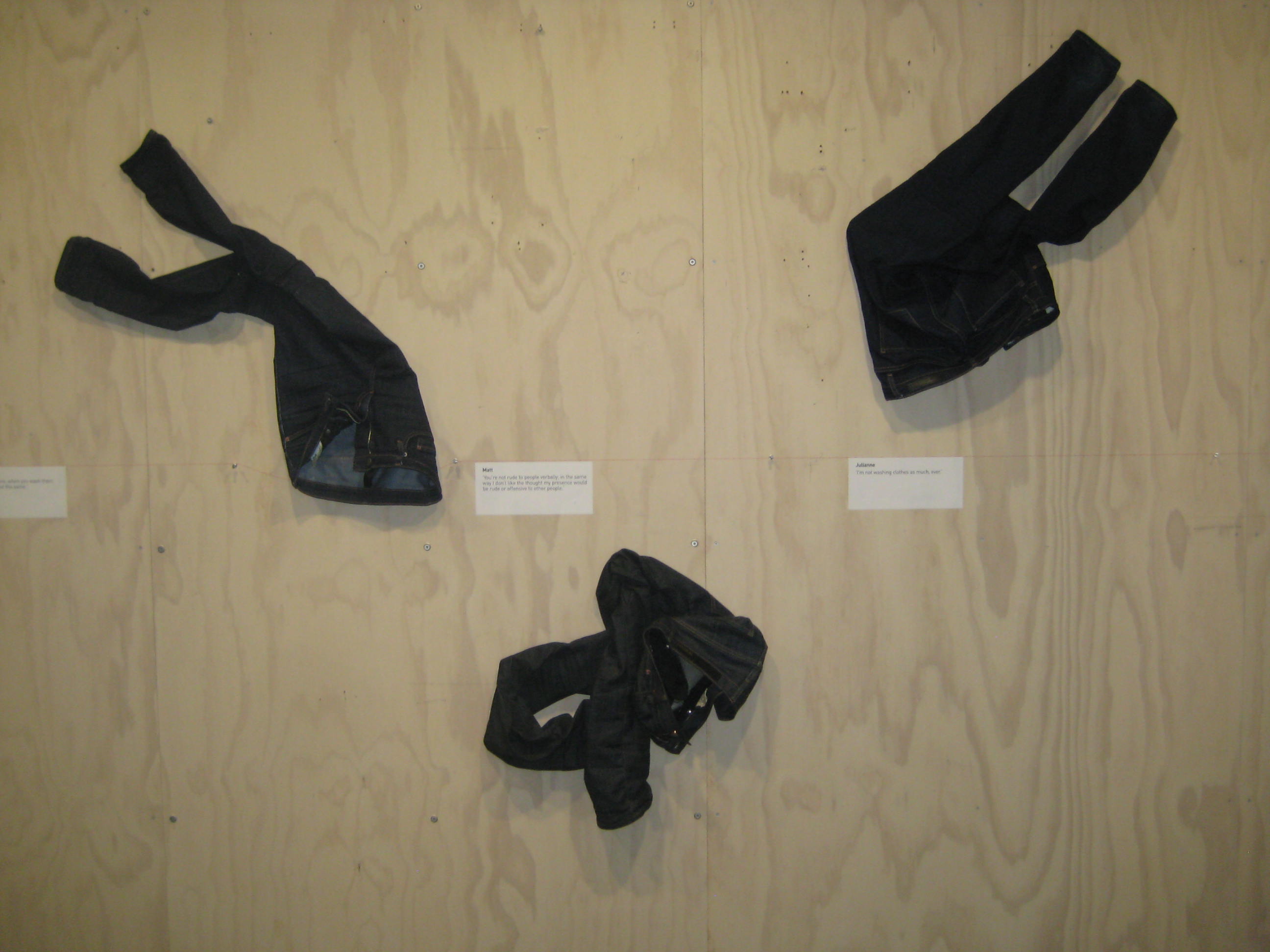
Nobody was Dirty at NGV
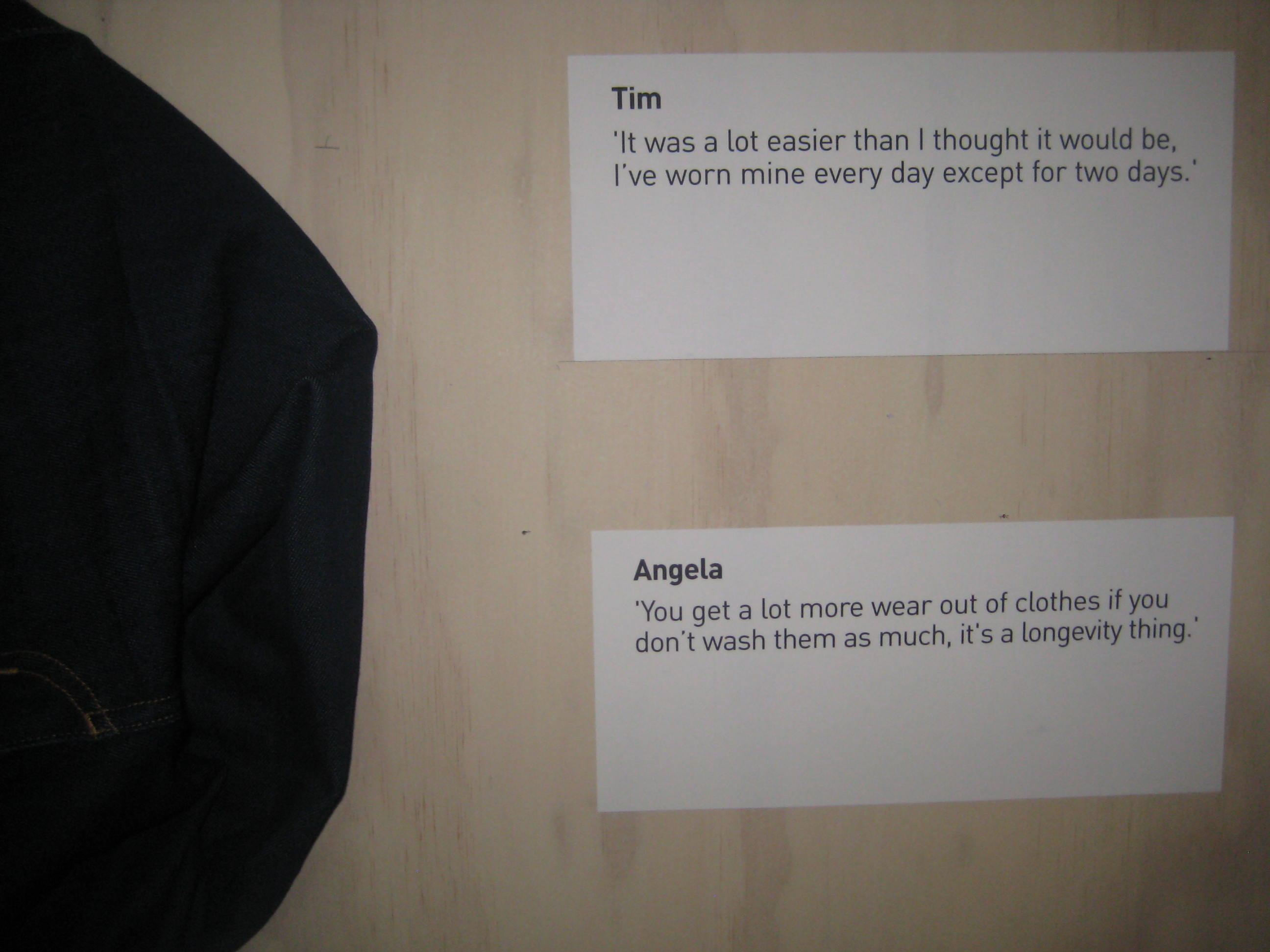
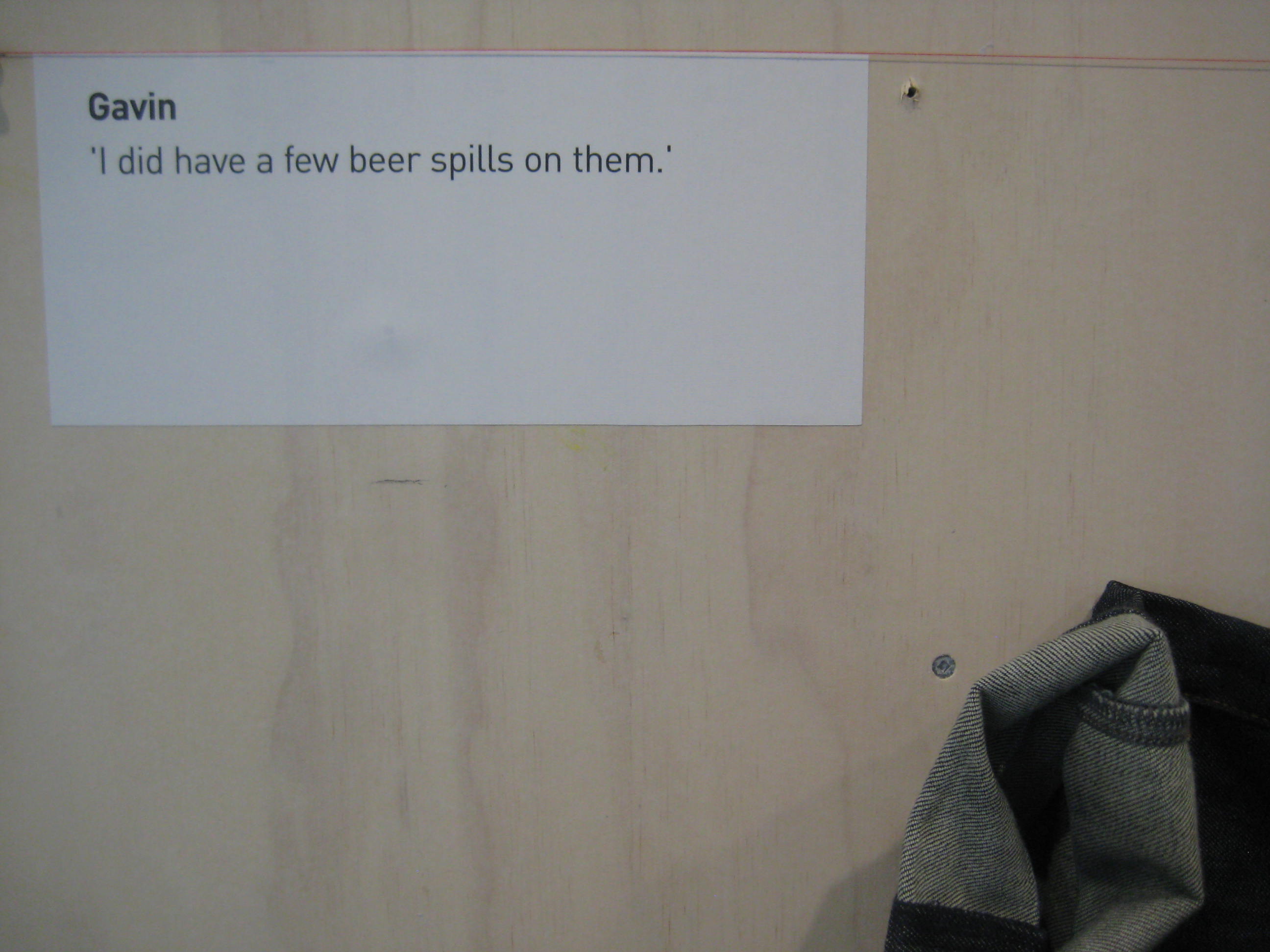
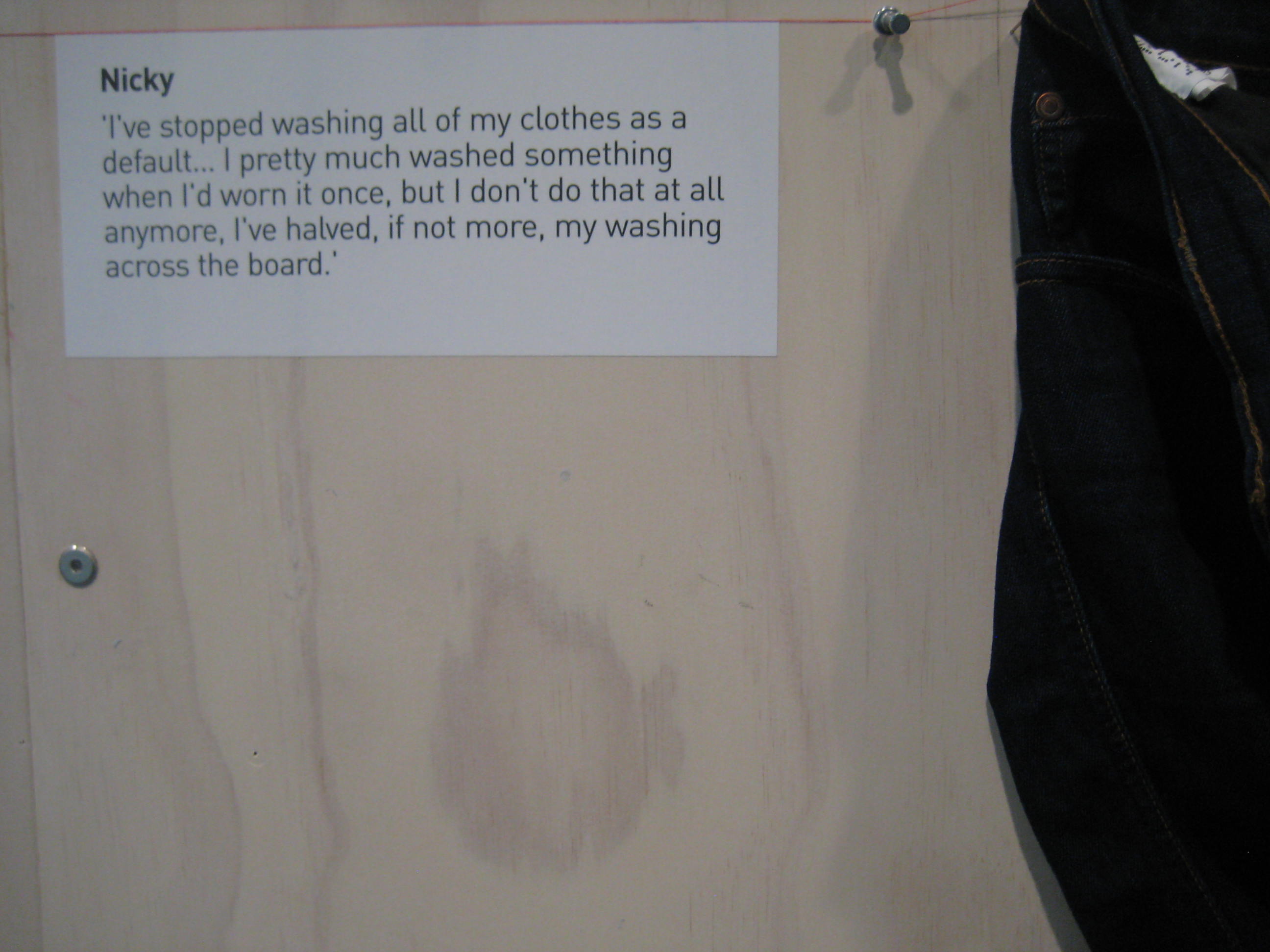
Nobody was Dirty has just finished up at The National Gallery of Victoria. I was happy to have such thoughtful engagement from everyday people, and my research is much more complete for attracting this element of community review. Below are some photos from the exhibition and the exhibition didactic, courtesy of Matthias McGregor.  I would be very interested to hear any comments on ideas of cleanliness, resource consumption and collective conventions.
“Like the herd animals we are,†said anthropologist Loren Eiseley, “we sniff warily at the strange one among us.† We have all experienced that anxiety of being the smelly one in the room, feeling just that little bit too grubby for our surroundings.  Maybe you were in a hurry and didn’t have a chance to iron your clothes.  Maybe you ran to make it on time and your jeans are sticky with sweat.  Maybe you splashed coffee on your shirt before an important meeting.  But can anyone around you actually tell?  Do we need to wash our clothes as often as we do?  And most important of all, did the person you met just now think you fetid or fabulous?
In Nobody was Dirty, curator Tullia Jack has persuaded her subjects to eschew their normal standards of cleanliness and wear the same pair of jeans for three months without washing them.  Thirty-two diligent soap dodgers took up the challenge, wearing their jeans for five days a week with a promise to stay detergent free.  For each extra dead skin cell, a drop of harmful chemical doesn’t reach the ocean. For every stain left unwashed, social norms questioned.  For each laundry load forgone, water and energy saved.
The fledgling global consciousness for sustainable living is well meaning but approaches are scattergun, often aimed at environmentally intensive industries. We know about anti-pollution policy, renewable energy and recycling. Â But are there smaller changes that affect bigger environmental gains?
“Exploring habitual resource consumption through mundane routines like laundry,†says Jack, “has provided insight into the way cultural norms shape social practices.  I’m excited to be injecting this knowledge back into the public domain, enabling people to make discerning choices about washing and conserving energy, water and chemicals.â€
The exhibition may surprise you. Â Stains wear away over time and bacteria levels quickly plateau. Â And the jeans? Â Well, smell them and see.
(Didactic words courtesy of Matthias McGregor)